Tuesday, November 8, 2011

2011 Annual Meeting of the ASIAN HOSPITAL FEDERATION (AHF) Board of Governors 2010


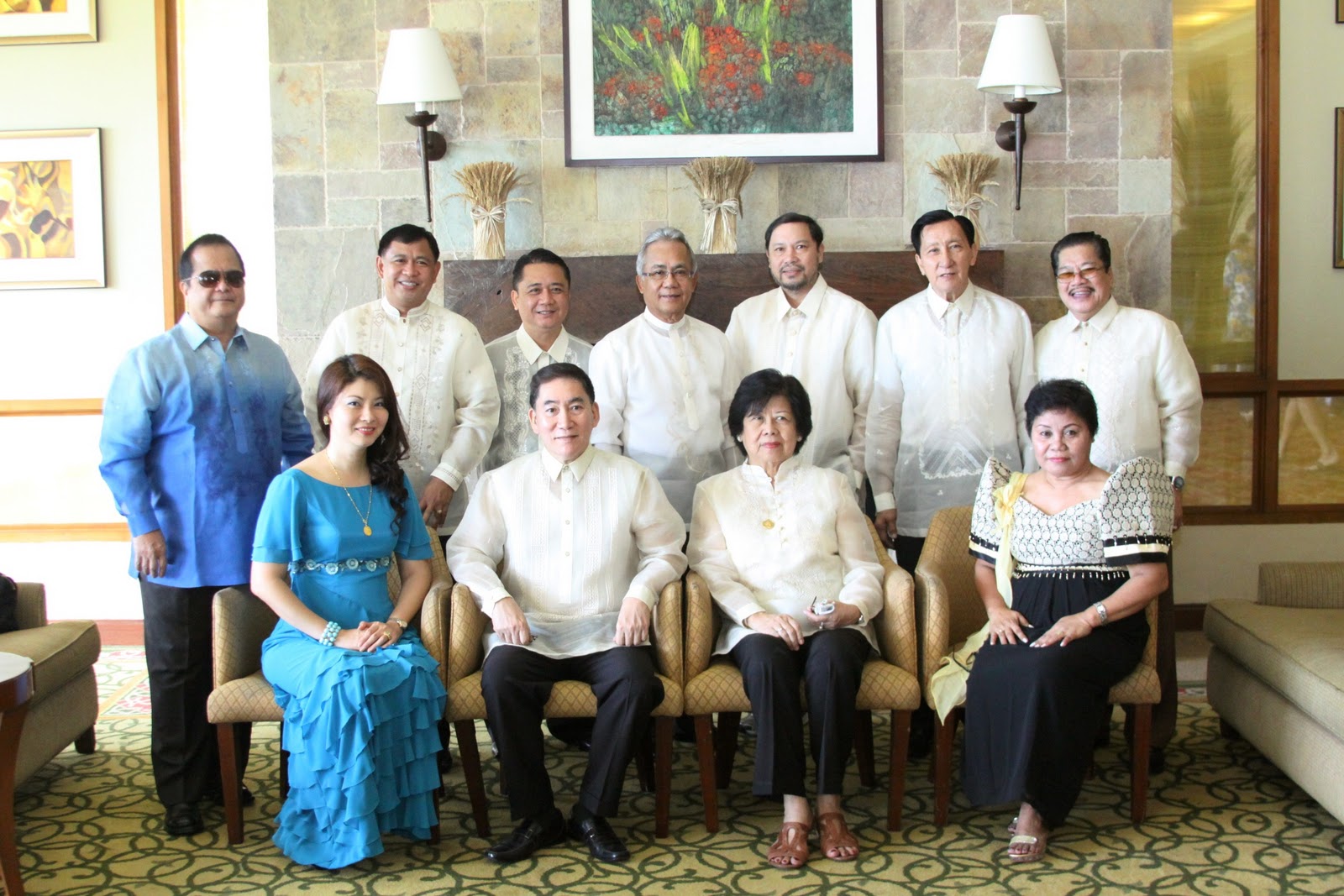
From left to right (sitting down): DR. Dr. Sutoto, Mkes (President of Indonesian Hospital Association), Dato’ Dr. Jacob Thomas (President of Association of Private Hospitals of Malaysia), Dr. Adib A. Yahya, MHA (AHF President 2010-2011), Dr. Ruben C. Flores (President of Philippines Hospital Association), Dr. Muki Reksoprodjo, SpOG (International Division, Indonesia Hospital Association).
From left to right (standing): Dr. Fukui Tsuguya (Japan hospital Association), Dr. Tsuneo Sakai (President of Japan Hospital Association), Chih-Hsiung Wu, MD., PhD (Vice President of Taiwan Hospital Association), Dr. Kwang-Tae Kim (Korea Hospital Association), Dr. Lawrence Lai (Senior Advisor, Hong Kong Hospital Authority), Dr. Wasista Budiwaluyo,  MHA (SecGen AHF 2010-2011).

The Annual Meeting of AHF Board Governors just recently held in Jakarta, Indonesia on 19th of October 2011.  The meeting was attended by 7 member -  country i.e.: Indonesia, Malaysia, Philippines, Hong Kong, Taiwan, Korea and Japan while UAE & Australia were absent. Hosted by the Indonesian Hospital Association in conjunction with the 11th of Indonesia National Seminar and the 24th of Hospital Expo.  More than 800 hospital and healthcare managers  has gathered for the National Seminar from all over Indonesia and more than 400 booths registered in the Expo.

During this year meeting, the Board also has accomplished the election of the next AHF President and President Elect January 2012 to December 2013.  Dr. Owen Curteis from the Australian healthcare was actually elected  as the President Elect 2011-2012 but due to some reason, The Australian Healthcare decided to demission the assigment.  As the result, the Board has voted Dato’ Dr. Jacob Thomas (2012 – 2013) as the next AHF President and Dr. Ruben C. Flores as the AHF President Elect (2012-2013).

As well as Board Meeting, AHF also organised a Symposium with topic: “Hospital Disaster Management – Lesson Learned” and was received ( with ) a very succesfull (response) from the audience.  The Federation is enthusiastic to continue the program activity in future to benefit the members by sharing knowledge and experience in every country.  The AHF President, Dr. Adib A. Yahya, MHA said,” In the Asia-Pacific region, people are severely affected by earthquakes, typhoons, floods, lamdslides, volacanoes, droughts, tsunami, wildfires and other natural hazards.  Asia’s vulnerability is compounded by socio-economic conditions that have steadily increased the impact of disasters.  Demographic changes, urbanization and environmental degradation have reduced the amount of habitable land available, forcing the settlement of hazard-prone, marginal lands, such as flood plains and steep sloves”.  He added,” One of our challenges is to think the unthinkable and reduce our risk of disasters.  We need to invest in disaster preparedness and disaster risk reduction work.  Prevention save lives.  If each country focuses on their specialties and shares that with the rest of the region , we’ll be better of.

Note:  The above was lifted from the official post of the AHF.

Thursday, October 27, 2011

OCT. 23, 2011-PHA’s ENDS ITS SERIES OF REG’L CONFERENCES FOR 2011 IN TAGAYTAY CITY.


Region IV A/B and NCR Regional Conference. The fine Sunday weather last October 23, 2011 saw some 200 representatives of member hospitals of the PHILIPPINE HOSPITAL ASSOCIATION troop to the “country’s 2nd Summer Capital”. It had been the last of the 2011 Series of Regional Conferences of the organization.


PHIC President Dr. Eduardo P. Banzon. The PHA had the distinct pleasure of welcoming the newly - installed Philippine Health Insurance Corporation President and Chief Executive Officer Dr. Eduardo Banzon, MSc, as its guest speaker. His appointment was announced by DOH Secretary Ona during the flag ceremony held at the PHIC grounds in Pasig City last October 17, 2011, barely 5 days before the PHA Regional Conference. Dr. Banzon used to be Philhealth’s Vice President for Health Finance Policy Service but left the agency to join the World Bank.


Highlights of Dr. Banzon’s speech .

Dr. Eduardo Banzon expressed his desire to push for the attainment of the Universal Health Coverage for all Filipinos’ program of Philippine President Benigno Aquino III.

He stated further that the protection extended by the government should be substantial enough and that there is a need to deepen the health coverage of Filipinos.

His speech centered on several premises for Universal Health Coverage:

1. More money for health.

a. To be able to extend wider benefits, funds should be made available

b. Consider increase in premiums to be able to sustain UHC

2. Use of the funds more on the demand side of the economic chart towards basic health insurance

a. Spending more money for more hospitals and doctors is no longer the typical and model response

b. Filipinos’ access to healthcare should be supported by health insurance; healthcare becomes free only because people have health insurance; insurance imbues people with right to health.

3. Primary Care Case Gate Keeping Approach.

a. It is not sustainable to have a free market (charge patients any amount hospitals and doctors want)

b. Case payment is part of the approach

c. Push for all rates to be case payment

d. Ensure that amount is fair

e. Hospitals should coordinate and assert itself to doctors who practice in their establishments

f. Employ incentives such as or maybe : high rates for Centers of Excellence, availability of specialized diagnostic equipment, highly skilled/trained doctors, hospitals located in remote and areas of conflict or great difficulties, etc.

4.  Case payment.

a.  It will come.

b.  It cannot just be imposed however on the private sector; a contracted negotiation is necessary

c.  Case payment can be viewed as a powerful marketing tool for hospitals

d.  Rates should be studied well and discussed thoroughly; consultations.


Other matters covered by Dr. Banzon were:

1.      Change is necessary and that it shall be driven by technology.

2.      Electronic filings, on line inquiries, computers and connectivity at all hospitals as part of accreditation

3.      Educate PHIC members how to navigate their health insurance

4.      Work closely with HMOs as supplementary/complementary partners

5.      Come up with a good dbase where list of members shall be complete down to their dependents

6.      Hospitals and Doctrors as necessary part of insurance

7.      Expect a differentiated approach where the “good guys” shall have an easy time while the “bad guys” will have to watch out.


He ended his speech with a call for dialogue between professionals and urged everyone to TRUST and WORK with PHIC.


His speech was received with a resounding applause from the audience.


Recap of the PHA  Conferences for 2011.

To recap, conferences for the different regions starting in February, 2011 were held in major cities:

Regn 3 Angeles City-Feb. 27,

Regn 7 & 8 Cebu City-March 27,

Regns 1, 2 & CAR Baguio City-April 17,


Regn 11, 12 & ARMM Davao City-May 29,


Reg 5 Legazpi City-June 26,

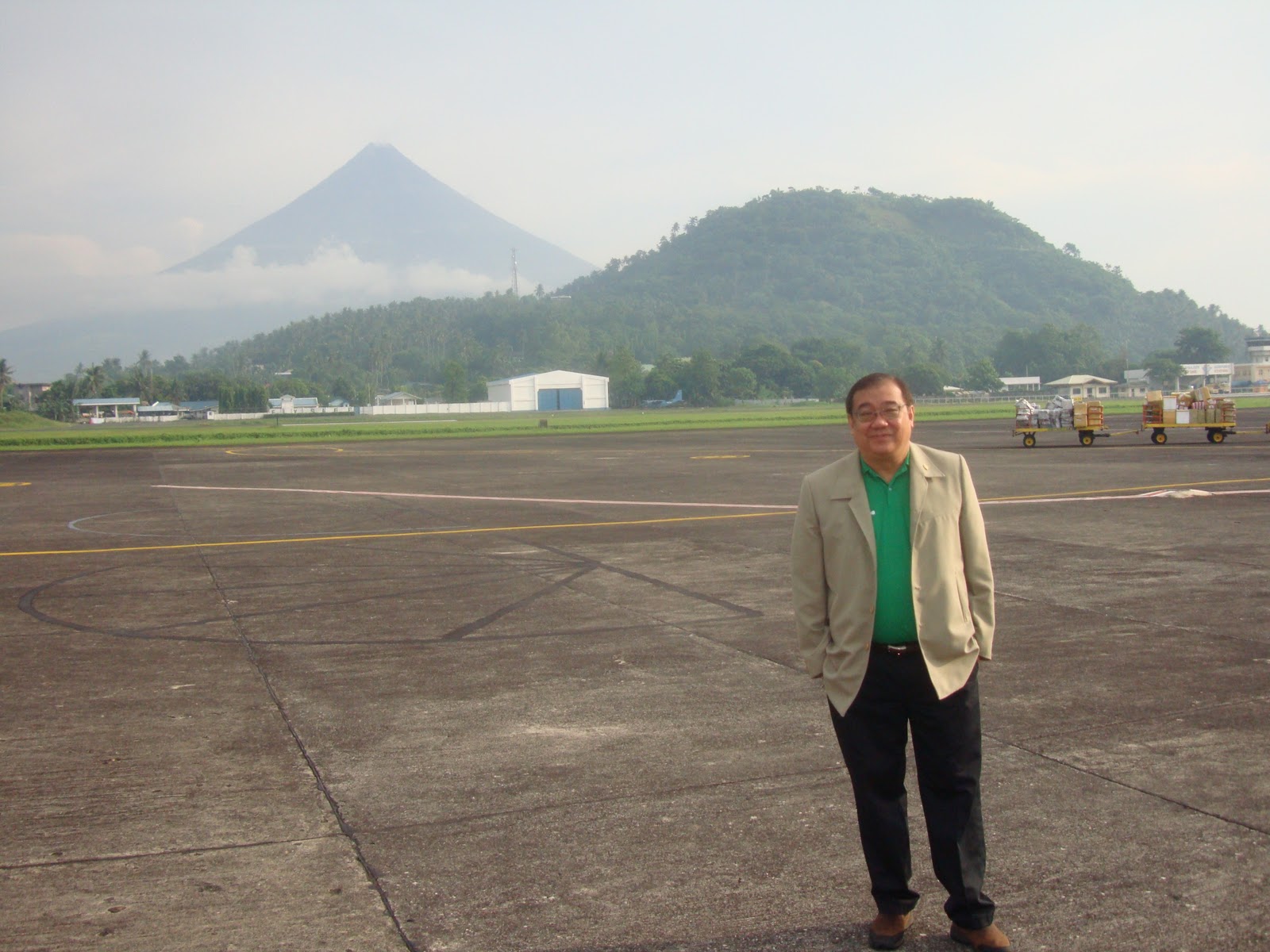
View of the majrestic Mayon Volcano from the airport tarmac

PHA BODs Dr. Maano , Dr. Salud and Dr. Ante taking a breather
the night before the Regional Conference in Legazpi

Mayor of Legazpi addressing the general membership

Regn 6 & Panay Islands Group Iloilo City-Aug 21,


Honorable Arthur Defensor , Governor of Iloilo
 addressing the general membership


Regns 9, 10 & CARAGA Cagayan de Oro City-Sept. 25,


Deputy Speaker Hon. Erin Tanada addressing the general membership

PHA President Ruben Flores giving his report to the general membership

Dondie Aranda of Isuzu Phil. Corp. who donated a
Samsung Mini Tablet as raffle prize

and Regns IV-A/B & NCR Tagaytay City-Oct 23.
Conferences' mainstay partner UNILAB's Ed Kanapi, Dr. Ruben Flores, Dr. Janet Tan

Winner of the Isuzu sponsored raffle prize, a 32" Sony
Bravia LCD TV, Jayanne May Esperacion of the
Vian Family Hospital

Isuzu's Prototype Ambulance


posing besides the Congratulatory greetings
for Dr. Ruben Flores as Asian Hospital Federation's
Presidentelect for 2012-2913
President for 2014-2015

 The Annual National Convention and Exhibits shall be the culminating activity and will be held on November 23-25, 2011 at the Manila Hotel.

The foregoing reflects part of the busy schedules of the National Board as well as the respective PHA Provincial Councils.  This is not to mention the multitude activities (symposium, seminars, trainings, speaking engagements, resource speaker, moderator, reactor, etc.)  that the various Directors and designated members have attended carrying the name of the PHA.
PHA Directors and Officers
Front Row L to R:  Dr. Janet del Mundo-Tan-Chief of Hospital, Ospital Ng Maynila Medical Center and PHA Secretary, Dr. Ruben Flores-Medical Center Chief II, Dr. Jose Fabella Memorial Hospital and PHA President, Dr. Concepcion Lim-Medical Director, Leona Lim Memorial Hospital and PHA VP-Vizayas, Dr. Winifreda Cagulada-Chief of Hospital, Teodoro Galagar District Hospital
Back: Dr. Edgardo Salud-Hospital Director, Quezon City General Hospital and PHA Treasurer, Dr. Conrado Brana, Jr.-Chief of Hospital, South Cotabato Provincial Hospital, Dr./Atty. Bu Castro-Official Representative of Bernardino General Hospital and PHA PRO, Dr. Hermogenes Jarin-Medical Director, Fairview General Hospital and PHA VP-Luzon, Dr. Jesus Jardin-Medical Director, Capitol University Medical City and PHA VP-Mindanao, Dr. Rodolfo Ante, Medical Director, Sta. Teresita Hospital, Dr. Romeo Maano-Medical Director, United Candelaria Doctors Hospital


Support of the various PHA Councils, DOH, PHIC as well as its mainstay partner for Regional Conferences, UNILAB,  has been invaluable. Participations of Healthsolutions Inc., BPI Leasing, Comlogik , Isuzu Philippines Corporation and their attractive raffle prizes during some of the Regional Conferences have provided spices and added flavors to the events.

Election of the new Board beckons come November 24, 2011.  PHA members, we know you will exercise your right to vote and will choose wisely.


Tuesday, August 23, 2011

ELECTION FEVER IS ABOUT TO GRIP ANEW THE PHILIPPINE HOSPITAL ASSOCIATION. 1st of a Series.

With the kind indulgence of non-Philippine Hospital Association members, this post is made at the behest of the PHA COMELEC.  It is dedicated to the upcoming annual electoral exercise of the organization. Past elections proved to be filled with excitement and controversies that Some might actually find the series of articles that will focus on the PHA Electoral Process a good read. 

ELECTION RULES for the Year 2011 which

will lead to the selection of its new set of

leaders.  The dynamism in an organization in

most part is dependent on its leadership. The

Philippine Hospital Association (PHA) at about

this time of the year, is teeming with

anticipation on the PHA Election Rules

package that were released for distribution to

the general membership on August 23, 2011. 

They consist of the following:

1.     Advisory of the PHA Comelec Chairman (text below)
2.     The 7-page Election Rules for 2011 (text below)
3.     Authorization Form for Gov’t Hospitals of its Designated Rep
4.     Authrzn Form for Private-Partnership of its Designated Rep
5.     Authrzn Form for Private-Designated Rep Single Proprietor 
6.     Authorization Form for Private-Corp of its Designated Rep
7.     Nomination Form
8.     Acceptance of Nomination Form

(You may click on the  links above to download the appropriate forms)

The Election:

-Where:  Manila Hotel Luneta Park

-When:   November 24, 2011, commencing at 8am & ending at 4pm.
For the last two years, registrations and elections at the PHA have been Computer Assisted :

-delegates qualified to participate in the poll exercise, cast their votes through a computer terminal.

-pictures of the qualified candidates are flashed on the monitor and choices are made by ticking on the voter’s choice among the candidates.

-At the end of the day, when the voting had been closed, the votes are electronically tallied and the results are known within minutes from the close of the balloting.

This is in contrast to the old system whereby

counting took the PHA Comelec up to past

midnight, in the presence of the

representatives of the various candidates.


PHA beat by about half a year  the PCOS

electronic voting/counting machines used in

the 2011 National Election by the National

government.

After the tally, the COMELEC Chairman

announces  the results to the candidate who waited

anxiously.

The winners or the new Board immediately

convenes and meet in a room within the hotel that

as reserved by the COMELEC .  The Board then

hold their own election of President, VP-Luzon,

VP Vizayas , VP Mindanao , Treasurer, Secretary

and PRO.

After this organizational meeting, the December

Board Meeting is then scheduled that serves as the

Planning Meeting for the incoming year as well as

the group’s Christmas Party.

The PHA election is always full of excitement,

from the nominating period and campaigning to

the winners’ installation and announcement of the

new set of Board and Officers the following day

before the general assembly.

For the advanced information of its PHA members,

all the necessary and related documents on the

PHA Elections are included in this post.


Higlighting the schedules, they are as follows:

August 23 , 2011

COMELEC Advisory on the PHA Election by snail mail, by email, by text messaging, by posts in the website (http://pha.ph), blogsite (http://www.phablog-recorder.blogspot.com, Facebook (philhospitalassn@yahoo.com), Twitter (@PHA1949).  Forms are likewise made available with the Advisory.
Sept.20,2011

Deadline for submission of Nominations.
Sept. 22, 2011

All nominations are sent out by PHA Secretariat to the nominees
October 7, 2011

Deadline for Acceptance of Nominations and submission/completion  of requirements
October 7, 2011

COMELEC meets to evaluate nominations and finalize the list of OFFICIAL CANDIDATES
October 8

List of Official Candidates are released with direct and formal advice to the candidates concerned
October 12-November 24

Campaign period
November 23, 2011

Comelec attends the final Board Meeting of the old Board and reports with updates on the Election to be held the following day.
November 24, 2011

Election day, with casting of ballots commencing at 8am and ending at 4pm.


The PHA COMELEC encourages all its members to actively participate in the nomination and electoral process as an exercise of their rights and show of concern for the organization in an atmosphere of constructive dynamism. 

Tuesday, August 9, 2011

Hospitals as Schools Partners in Mental Health Service Provision


This is a guest post by Prof. Jerome Babate , Chairman of the Board of the RO DIAGAN Cooperative Hospital in General Santos City.


There is a little shift of my focus this time as this is largely intrigued by a host of problems encountered by our schools on health aspects (food poisoning, malnourishment, among others). The nurse in my persona prodded me to look into school issues from the lens of a health care consultant. 

Personally, I recognize that school success is facilitated by factors in students' lives such as psychological health, supportive social relationships, positive health behaviors, and schools free of violence and drugs. Accordingly, mental or psychological health in childhood and adolescence is defined by the achievement of expected developmental cognitive, social, and emotional milestones. Mental health leads to the student's developing satisfying social relationships, and demonstrating effective coping skills. Let us remember that mentally healthy children and adolescents enjoy a positive quality of life; function well at home, in school, and in their communities. Reads interesting and idealistic!

However, to attain such state, we need a collaborative and coordinated effort among schools, families, and communities to ensure that all children and adolescents achieve positive academic and behavioral outcomes.

One of the most important of these positive outcomes is psychological competence, a set of skills and attitudes that leads to positive mental health and a strong sense of well-being.To that end, I advocate the inclusion of comprehensive mental health services in the schools, emphasizing prevention and early intervention.

Having mentioned earlier, schools are the logical point of entry to develop the efficacy of mental health services to children and adolescents. As a suggestion, our schools in the urban areas may partner with our hospitals (its one way of developing the latter's corporate social responsibility) to craft mental health services for children. School-based and school-linked services can be designed to address students' mental health needs using a range of service options ranging from prevention to intensive intervention.  The key to making mental health services effective is to ensure that they are accessible to students and families

Thursday, August 4, 2011

ACCREDITATION: THE PHILIPPINE EXPERIENCE

(This is a blog post by the President of the Philippine Hospital Association, Dr. Ruben C. Flores. He is currently the Medical Center Chief of the Dr. Jose Fabella Memorial Hospital.  This is the article he submitted to the Asian Hospital Federation for feature in their Journal to come out in the Third Quarter of 2011.)     

Dr. Ruben C. Flores
Phil. Hospital Assn. President


     Accreditation as a way to ensure compliance to quality standards and continuous quality improvement is just beginning to take root in the Philippines’ health care system.

The passage of the National Health Insurance Act of 1995 saw the establishment/creation of the Philippine Health Insurance Corporation (PHIC).  Because PHIC as per RA 9241, Article 1, Section 2 is mandated to promote the improvement of quality through the institutionalization of quality assurance at all levels of the health care delivery system, accreditation was the next step. 

Thus in 2002, PHIC launched its Benchbook for national application.  The Benchbook standards were developed based on International standards, more particularly, the ACHS and JCI standards for hospitals adopted to the Philippine situation taking into account the local circumstances, laws and culture.  This Benchbook was perceived as a new way of incentivizing hospitals to adopt quality improvement activities in order to be granted by PhilHealth an accreditation status. Accreditation is linked with PHIC reimbursement. 

This PhilHealth Benchbook aims to assess the other aspects of hospital operation focusing on the process and outcome beyond mere structural standards compliance.  Specifically the Benchbook look at the following areas:

1.    Patient Rights and Organizational Ethics
2.    Patient Care
3.    Leadership and Management
4.    Human Resource Management
5.    Information Management
6.    Safe Practice and Environment
7.    Improving Performance
This Benchbook was adopted as the new accreditation standards for hospitals and was implemented in 2010.  In its first year of the PhilHealth Benchbook implementation, many hospitals exerted efforts to comply with the standards and the table below shows the percentage of achievement per level:


Level of Accreditation
Number of Hospitals
Percentage

Center of Safety
1246
87.99%
Center of Quality
126
8.90%
Center of Excellence
44
3.11%
T O T A L
1416
100%


Based on the survey results, the following can be concluded.

1.    Benchbook compliance seems not a significant problem among higher level hospitals (Lavado et al, 2010)

2.    Some lower level hospitals experience hardship in complying with the standards because of the administrative and financial constraints.


3.    Training and educational assistance should enable the majority of hospitals to obtain accreditation in one to two years.

4.    The impact of the Benchbook on improving health outcomes has yet to be established.

The Philippines can be considered unique in a sense because accreditation is being undertaken by a government instrumentality.  

To further institutionalize the national accreditation initiatives, a body that will undertake the accreditation of hospitals was espoused by the Department of Health. Towards this end, a national multi-stakeholders consultation meeting was conducted last June 10, 2011.

In this meeting, the Philippine Council for the Accreditation of Healthcare Organization (PCAHO) was unanimously endorsed by the delegates to the Secretary of Health to be designated as the National Accrediting body for hospitals adopting the PhilHealth Benchbook standards as the accreditation tool. 

This new development would effect a shift on the task of accreditation from being performed by government (PHIC) to one that is carried out by a private entity thru a 3rd party accreditation scheme.  PCAHO is actually a multi-stakeholder organization dedicated to quality improvement initiatives and accreditation and has been in existence for almost thirteen (13) years now.  PCAHO was borne out of an ADB Funded Project – Strengthening of Licensing and Regulation of Hospitals, DOH, 1995-1997 – that saw the need for Accreditation of Hospitals for the improvement of the Quality of hospital services.  The Department of Health currently recognizes PCAHO as the National Accrediting Body for Accreditation of Health Facilities for Medical Tourism and the Certifying Body for the QSS of medical clinics of OFW and CDTL.  PCAHO is currently an institutional member of the International Society for Quality in Healthcare (ISQua) and an Associate member of the ISQua Accreditation Federation (IAF).  It is also a National member of the Asian Society for Quality in Healthcare (ASQua) and a member of the Executive Board.  It has been invited to serve on the JCI Asian Pacific Advisory Council

The task ahead is Herculean. PCAHO has to gain the credibility and acceptability in the hospital community by establishing a track record for competence in accreditation at par with local and eventually international standards.

It is to be hoped that with this new development, accreditation in the country will leapfrog and thereby ensure safe, quality, and excellent health services to the Pilipino and the global community. 


                                         By:  RUBEN C. FLORES, MD, MHA
                                                                                 PHA- President